
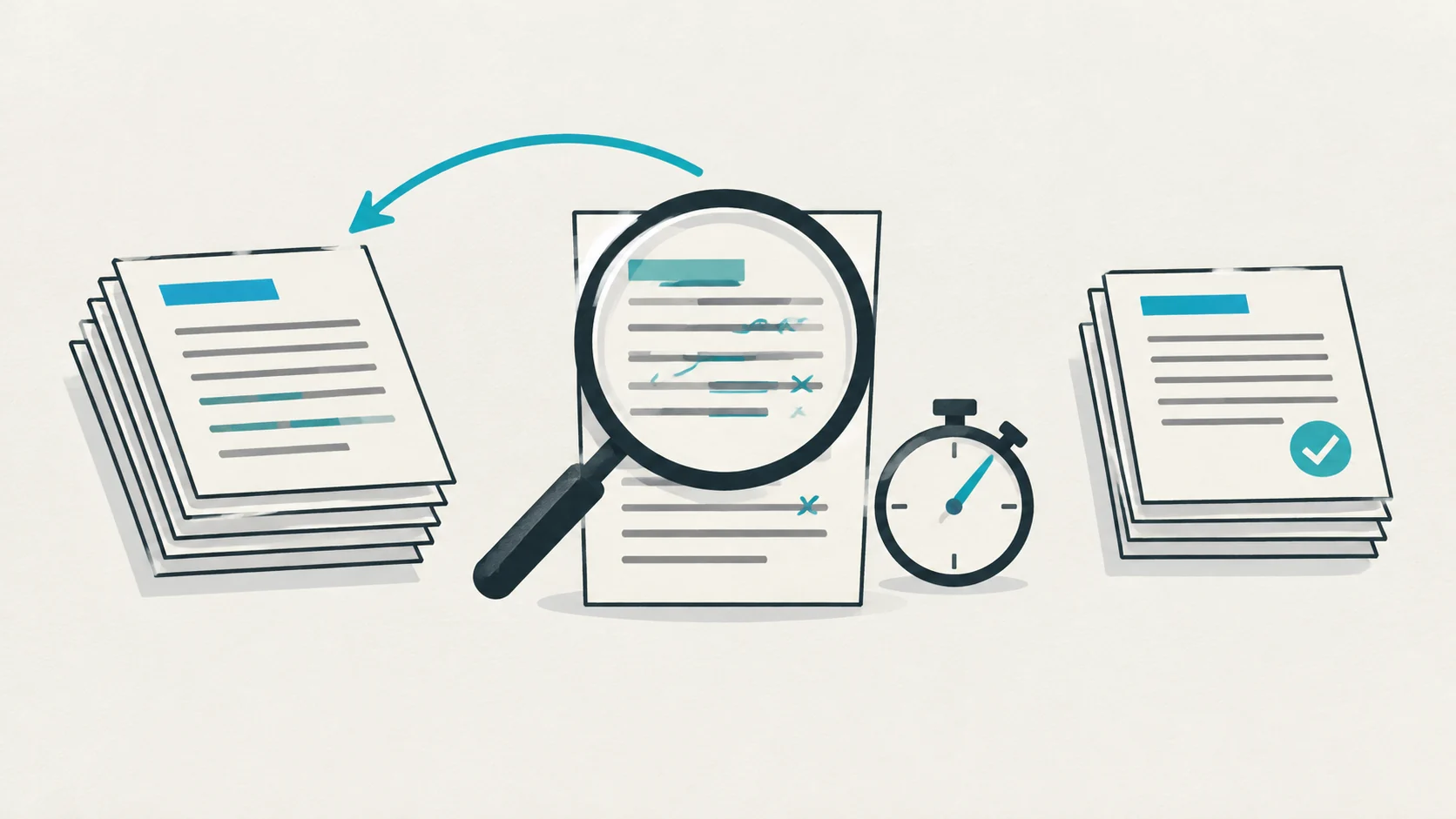
Workday surveyed 3,200 employees who use AI at companies with $100M+ in revenue. Nearly 40% of the time AI saved them went right back into fixing mistakes, rewriting content, and double-checking output. Only 14% said they consistently get clear, positive results from it.
If you're running marketing for a B2B manufacturing, robotics, transportation, or supply chain tech company, that probably sounds familiar. You're keeping campaigns going, learning AI, figuring out where it fits, and improving all of it at once, with a lean team. Meanwhile, your sales team is adopting AI just as fast and needs material that stands out. And you're usually selling to a buying committee: technical evaluators, operations leaders, IT, procurement, and the C-suite. Every one of them notices when something's off.
This is what two-plus years of testing has taught us about where AI earns its keep in B2B marketing, where it doesn't, and how to find out which is which on your own team.
How we tested AI in our own marketing
We use AI every day, and we took it slow. It's not our first rodeo with a shiny new marketing channel or tool. They land differently once marketers actually work with them and prospects respond to the output than they do in the hype.
I'm skeptical by nature and I love data. So when the AI hype started, I started testing in a sandbox, and I've kept at it for over two years. That testing, plus 20 years in B2B marketing, is what I base this advice on.
Overall, I see a net gain. It comes from knowing what AI does well and what it doesn't, then adjusting the team, roles, or process to cover the rest. Like most things that drive revenue, it takes precision and skilled, iterative work. Quality is a core value for us, so nothing goes out without a review from someone who knows the subject. Some of what follows we learned the slow way.